Home » tractor with tracks in Philippines

Tractor with Tracks in Philippines: Check Your Requirements

tractor with tracks in Philippines

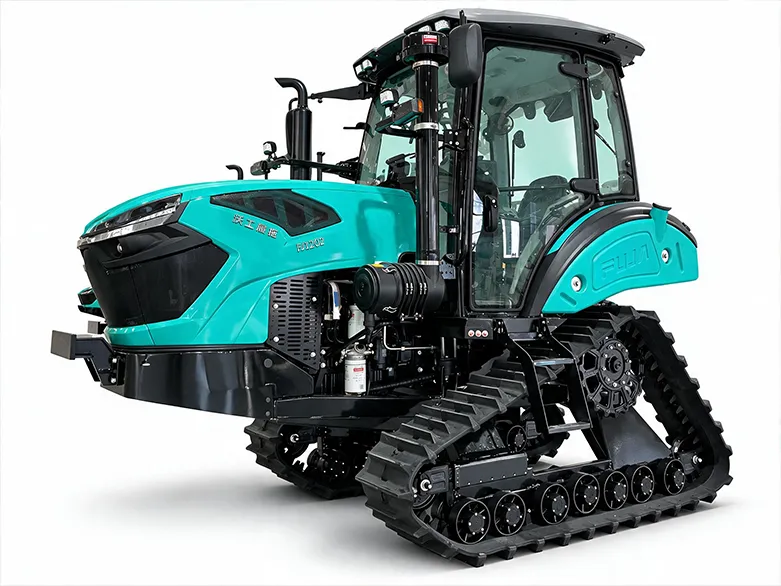
A tractor with tracks in Philippines usually refers to a tracked agricultural tractor, where continuous tracks replace conventional wheels to spread machine weight across a wider contact area. Buyers may consider this layout for farm work where soft or uneven ground makes traction and ground pressure important, but suitability depends on the machine configuration and the actual field conditions. The available information does not identify a specific tractor model, engine, track design, working width, or attachment package, so those details should be confirmed before comparing suppliers. Agricultural Machinery Manufacturer & Supplier presents itself as a premium, innovation-focused manufacturer with a 68,000 m2 smart manufacturing base, intelligent R&D, and global service support. For Philippine buyers, the practical first step is to describe the intended work and operating environment rather than assume that every tracked tractor suits every farm. This page outlines what the product category means, how to assess local suitability, and what information to prepare when requesting model or configuration details.

Technical Detail

Configured around process stability, mold life, and long-term uptime.

A tractor with tracks in Philippines is a tracked agricultural machine intended to provide propulsion through continuous track assemblies rather than standard tires. The track layout can distribute a machine’s weight over a larger ground-contact area than wheels, which may help maintain traction on certain soft or uneven surfaces. Actual performance depends on the tractor’s design, track dimensions, total weight, soil, and operating practice; no model-specific performance figures have been supplied here. Agricultural Machinery Manufacturer & Supplier is positioned as a premium manufacturer focused on innovation. Its stated resources include a 68,000 m2 smart manufacturing base and an intelligent R&D function described as designing for real-world challenges. These are brand-level details, not specifications for a particular tracked tractor. The company also reports serving 150+ customers and identifies CE among its certifications. Buyers should request the relevant model’s technical sheet and applicable conformity documents rather than assume that a general brand certification applies to a particular machine or configuration. This product category may be relevant to farms evaluating traction and ground contact for their working conditions, but the right machine cannot be established from the keyword alone. Before making a purchase decision, confirm the exact model, power and operating limits, track configuration, compatible implements, local support arrangements, and documentation. Treat these as open verification points until the supplier provides product-specific information.

Heavy-Duty Farm Crawler Tractor

How Tracked Tractors Differ from Wheeled Machines

A tracked tractor moves through linked track assemblies that circulate around its running gear, creating a continuous contact surface with the ground. In general, this arrangement changes how the machine transfers drive force and distributes weight compared with a wheeled tractor. That distinction is why buyers often investigate tracked machines for fields where tire traction or ground pressure may be a concern. It does not, by itself, establish that a particular tractor can work in every soil or crop condition. The result depends on the complete design, including the machine’s weight, track width and construction, drive system, and the implement being used. None of those product-specific details are available for the tractor referenced on this page. Ask the supplier for a diagram or technical description of the running gear and track assembly, as well as the machine’s operating limits. If the work involves turning in narrow rows, frequent transport, or mixed field and road use, clarify how the chosen design handles those tasks. Understanding the mechanism helps buyers ask useful questions without treating the word “tracked” as a performance guarantee.

Heavy-Duty Farm Crawler Tractor

Assess Philippine Field Conditions Before Choosing Tracks

Suitability depends on the farm, not simply on the country where the tractor will operate. Philippine agricultural sites can differ in soil, slope, rainfall exposure, field access, crop layout, and the distance between work areas. Buyers should describe the actual ground conditions and seasonal changes to the supplier. For example, note whether the tractor will encounter soft soil, firm ground, slopes, tight turning areas, or routes that require travel beyond the field. Then identify the main task and the implement involved, since attachments can affect traction, working load, and clearance. A tracked machine may be worth evaluating when ground contact is a concern, but the available information does not confirm its suitability for any specific local crop or terrain. It also does not provide limits for slopes, water exposure, transport, or road operation. Request written operating guidance for the exact model and configuration, and check that the proposed setup accommodates field access and routine movement. If conditions vary substantially across the farm, ask the supplier to assess each work area separately rather than relying on one general description.

Heavy-Duty Farm Crawler Tractor

Prepare a Useful Tractor Inquiry

To get a relevant response, send Agricultural Machinery Manufacturer & Supplier a concise description of the job before requesting a model recommendation. Include the farm location in the Philippines, the main crop or agricultural task, the soil and terrain, and any seasonal conditions that affect access. Specify the implement or attachment you intend to use, if known, and explain whether the tractor must travel between fields or operate in confined rows. Ask the supplier to identify the proposed model and provide its product-specific technical sheet, including engine and operating information, track configuration, compatible implements, and stated limits. Request confirmation of what is included in the offered configuration; no optional attachments or model variants have been identified in the available information. Also ask which CE documentation, if applicable, belongs to that exact model and configuration, and what service or parts support is available for your location. A clear inquiry lets the supplier distinguish a general tracked-tractor discussion from a technically suitable proposal. Do not assume that specifications, attachments, certification, or support arrangements are included until they are confirmed in writing.

News

Industry updates

Products

Production modules

Why Choose Us

Innovation and Manufacturing Backed by a Defined Supplier Profile

Agricultural Machinery Manufacturer & Supplier presents a manufacturing profile that buyers can use as a starting point for supplier evaluation. The company reports a 68,000 m2 smart manufacturing base and an intelligent R&D function focused on practical design challenges. It also states that its smart manufacturing approach is intended to support reliable production. These claims describe the brand’s stated capabilities; they do not replace model-level technical evidence or independent verification. The company reports serving 150+ customers and identifies global service support as part of its offer, which may be relevant to buyers assessing an overseas supplier. Ask what support is available for the Philippines, including the process for technical questions and parts inquiries, rather than assuming a local service presence. CE is listed among the brand’s certifications, but buyers should confirm whether the exact tractor model and proposed configuration have applicable documentation. A sound purchasing discussion should connect the supplier’s manufacturing and R&D profile to the machine being quoted: request its specification sheet, configuration details, relevant documents, and written answers to your operating questions before comparing offers.

FAQ

Common technical questions

Can you confirm the horsepower and track width of this tractor?

No model-specific horsepower or track-width information was provided. Ask the supplier for the technical sheet for the exact tractor model and configuration you are considering.

Is a tracked tractor suitable for wet or soft fields in the Philippines?

It may be worth evaluating where ground contact and traction are concerns, but suitability depends on the field, machine design, and operating limits. Share the soil and seasonal conditions with the supplier and request written guidance for the proposed model.

What should I send when requesting a quotation or recommendation?

Provide your location, intended farm task, terrain and soil conditions, expected seasonal use, and any implement requirements. Ask the supplier to identify the model and confirm its specifications, included configuration, applicable documentation, and support arrangements.

Does the CE certification listed by the brand apply to every tracked tractor?

That cannot be confirmed from the available information. Request the applicable CE documentation for the specific model and configuration being offered; do not treat a brand-level certification statement as proof for every product.

Need a solution for your project?

Share your product type, target capacity, and application requirements. Our team can review the details and recommend a practical next step.

Contact Us